

Crane Lift Planning Guides
Each guide explains one calculation behind a lift plan — what it is, a worked example, what it assumes and where it stops being useful. They pair with the free calculators, so you can read the reasoning and then run your own numbers.
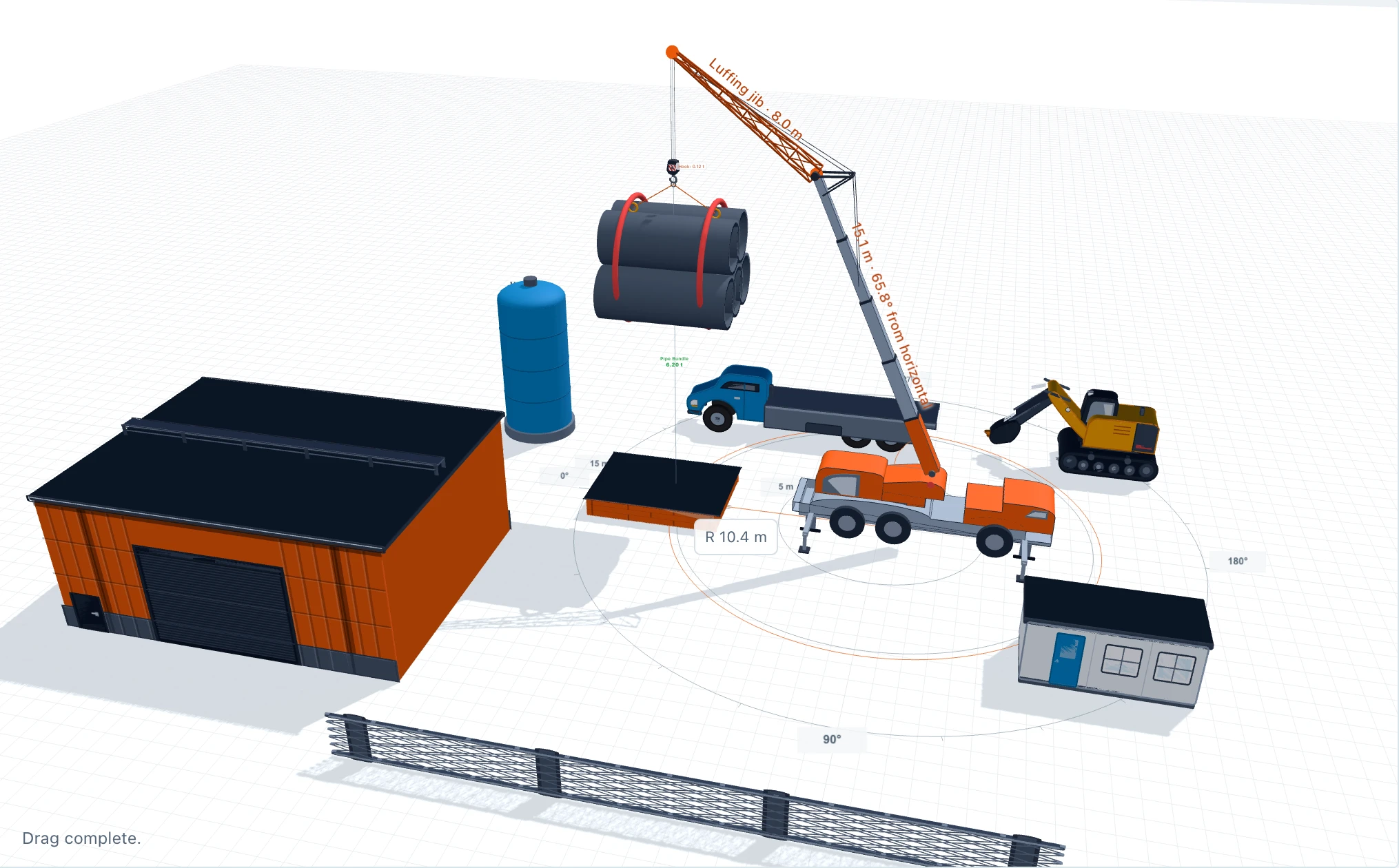
What Goes Into a Lift Plan
Everything a professional crane lift plan must contain: load details, rigging, crane setup, radius, ground bearing, hazards, and sign-offs.
Read the guide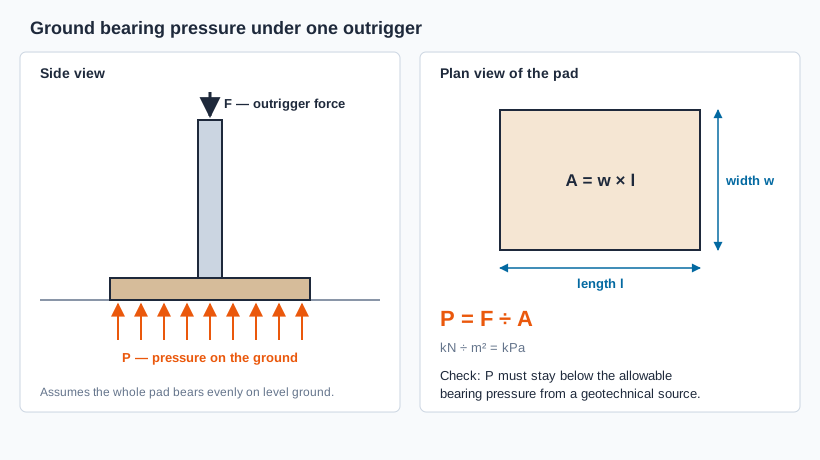
Ground Bearing Pressure
The ground bearing pressure formula for crane outriggers, a worked example with real numbers, where the allowable value comes from, and common mistakes.
Read the guide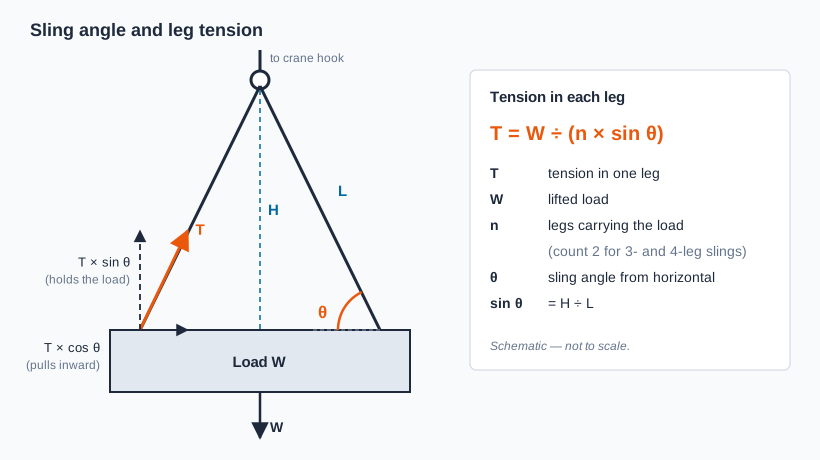
Sling Angle & Leg Tension
The sling leg tension formula, an angle factor table, worked two-leg and four-leg examples, and why angles below 30° need a qualified person’s approval.
Read the guide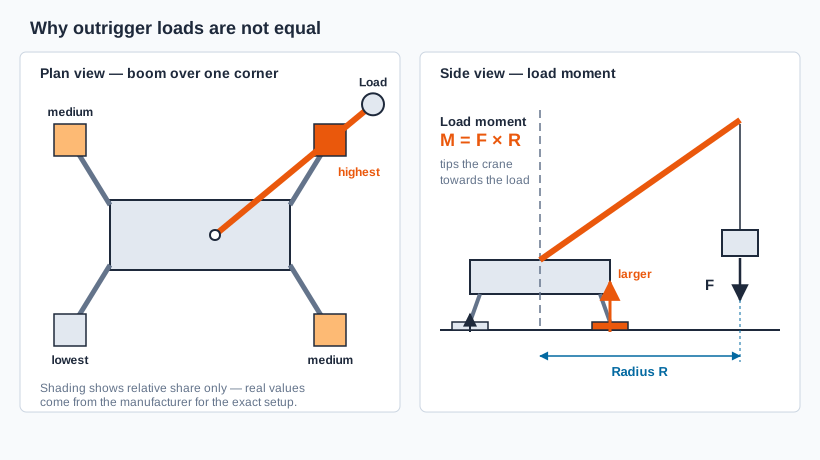
Outrigger Loads
Why crane outrigger loads are not total weight divided by four, what drives the maximum leg load, and where to get a verified figure for your lift.
Read the guide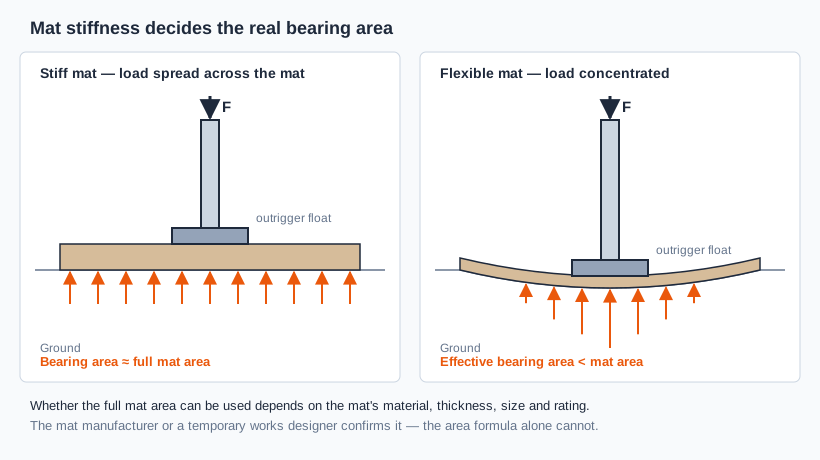
Crane Mat Sizing
Size a crane mat or outrigger pad from a verified leg load and allowable ground pressure, with metric and imperial worked examples and the limits.
Read the guide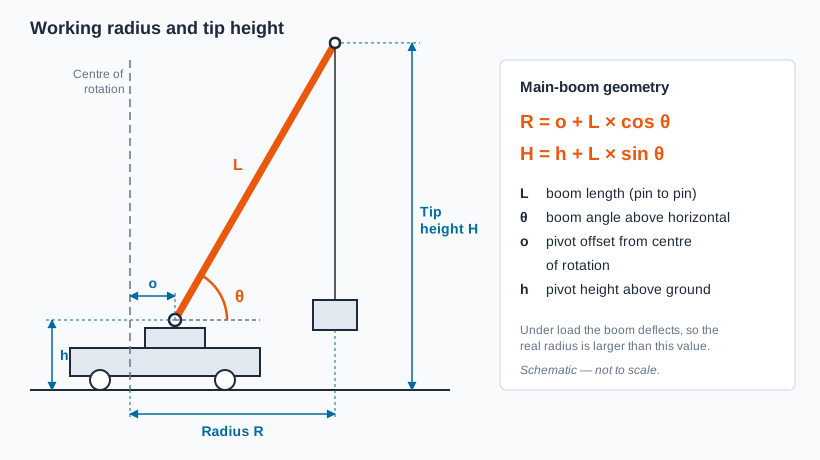
Boom Angle, Radius & Tip Height
How boom length and angle set a crane’s working radius and tip height: the formulas, a worked example, an angle table and why measured radius matters.
Read the guide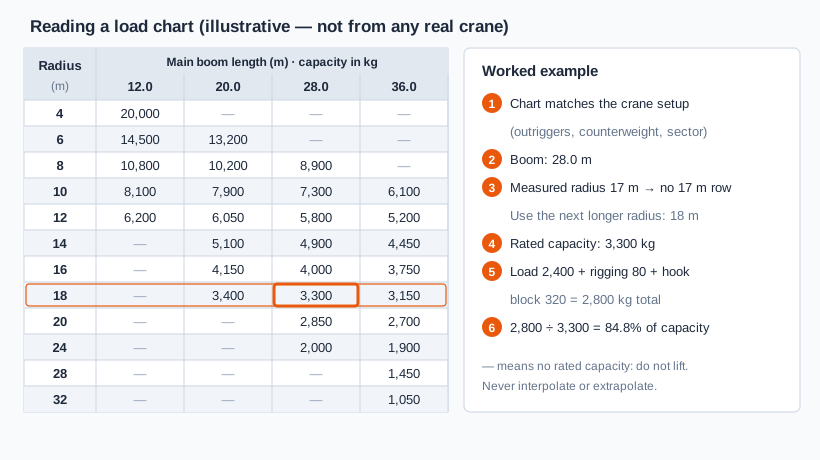
Reading a Load Chart
Step-by-step guide to reading a mobile crane load chart: the right configuration, radius and boom length, deductions, chart notes and common mistakes.
Read the guide